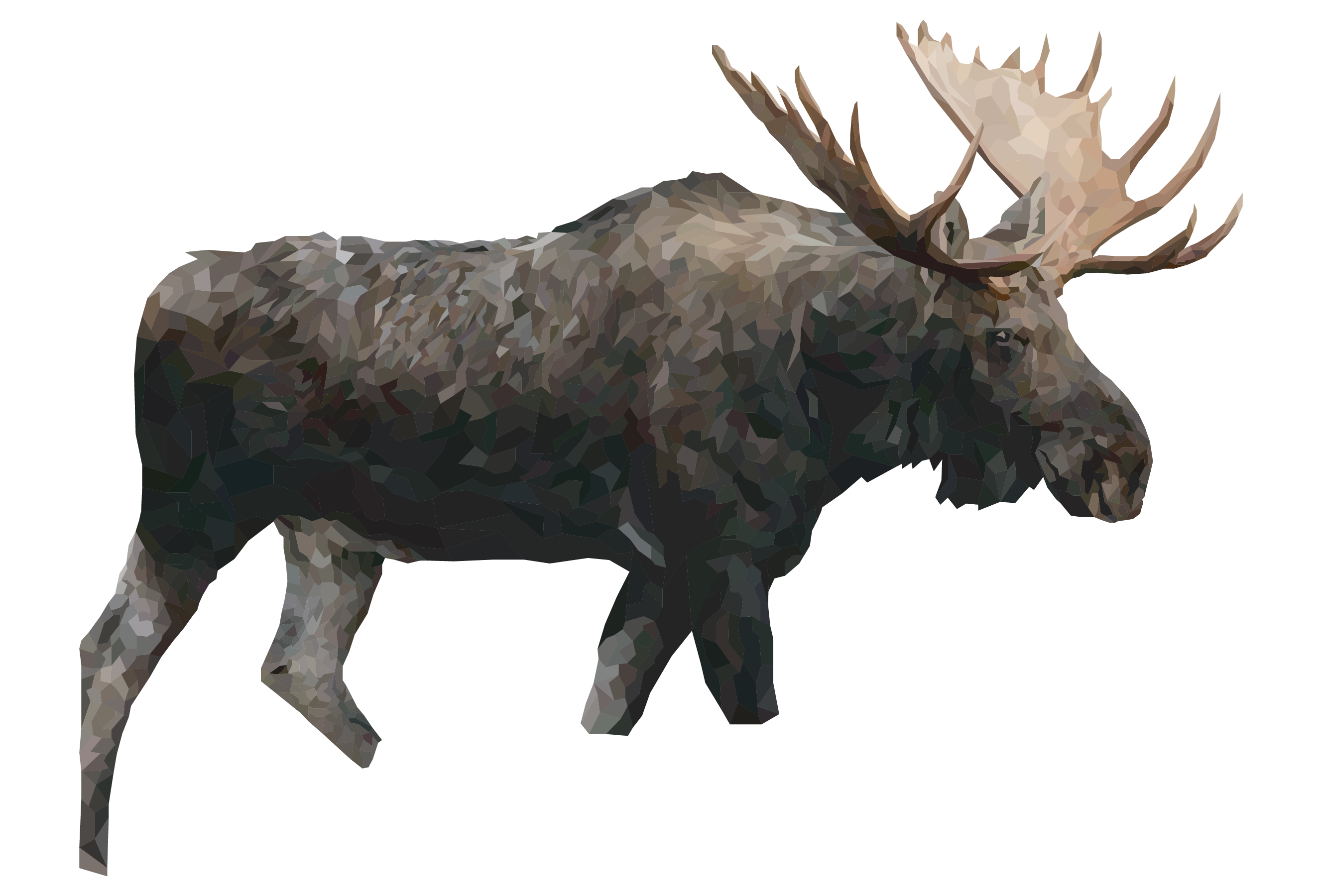
Alces Alces
The Moose is a member of the New World deer subfamily and is the largest and heaviest extant species in the deer family. Moose are distinguished by the broad, open-hand shaped antlers of the males; other members of the deer family have antlers with a twig-like configuration. It typically inhabits boreal forests and temperate broadleaf and mixed forests of the Northern Hemisphere in temperate to subarctic climates. Hunting and other human activities have caused a reduction in the size of the moose’s range over time. It has been reintroduced to some of its former habitats. Currently, most moose are found in Canada, Alaska, New England, with Maine having the most of the lower 48 states. Unlike most other deer species, moose do not form herds and are solitary animals, aside from calves who remain with their mother. Although generally slow-moving and sedentary, moose can become aggressive and move quickly if angered or startled.
Moose require a habitat with adequate edible plants along with cover from predators, and protection from extremely hot or cold weather. Moose travel among different habitats with the seasons to address these requirements. Moose are cold-adapted mammals with thickened skin, dense, heat-retaining coat, and a low surface:volume ratio, which provides excellent cold tolerance but poor heat tolerance. Moose survive hot weather by accessing shade or cooling wind, or by immersion in cool water. In hot weather, moose are often found wading or swimming in lakes or ponds. The moose is a herbivore and is capable of consuming many types of plant or fruit. The average adult moose needs to consume 9,770 kcal per day to maintain its body weight. Moose also eat many aquatic plants, including lilies and pondweed. A full-grown moose has few enemies except packs of gray wolves, which can still pose a threat, especially to females with calves. Brown bears are also known to prey on moose of various sizes.