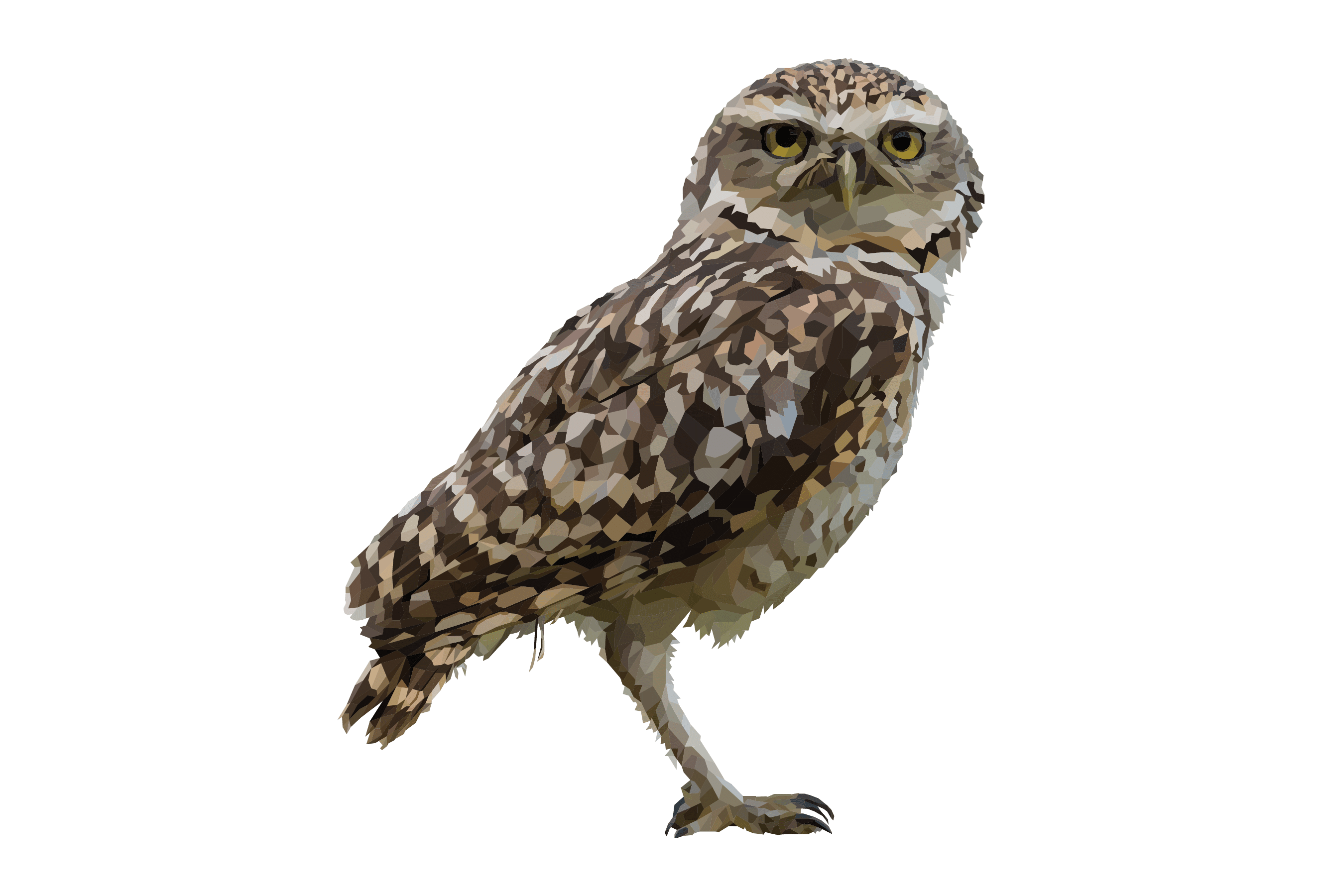
Athene Cunicularia
The Burrowing Owl is a small, long-legged owl found throughout open landscapes of North and South America. Burrowing owls can be found in grasslands, rangelands, agricultural areas, deserts, or any other open dry area with low vegetation. Burrowing owls often nest and roost in the burrows made by ground squirrels, a strategy also used by rattlesnakes. When threatened the owl retreats to the burrow and produces rattling and hissing sounds similar to that of a rattlesnake. The behavior is suggested to be an example of acoustic mimicry and has been observed to be an effective strategy against animals that are familiar with dangers posed by rattlesnakes. Unlike most owls, burrowing owls are often active during the day, although they tend to avoid the midday heat. Like many other kinds of owls, though, burrowing owls do most of their hunting from dusk until dawn, when they can use their night vision and hearing to their advantage. Living in open grasslands as opposed to forests, the burrowing owl has developed longer legs that enable it to sprint, as well as fly, when hunting.
When hunting, they wait on a perch until they spot prey. Then, they swoop down on prey or fly up to catch insects in flight. Sometimes, they chase prey on foot across the ground. The highly variable diet includes invertebrates and small vertebrates, which make up roughly one-third and two-thirds of the diet, respectively. Burrowing owls mainly eat large insects and small rodents. Burrowing owls have bright eyes; their beaks can be dark yellow or gray depending on the subspecies. The owls have prominent white eyebrows and a white “chin” patch which they expand and display during certain behaviors, such as a bobbing of the head when agitated.