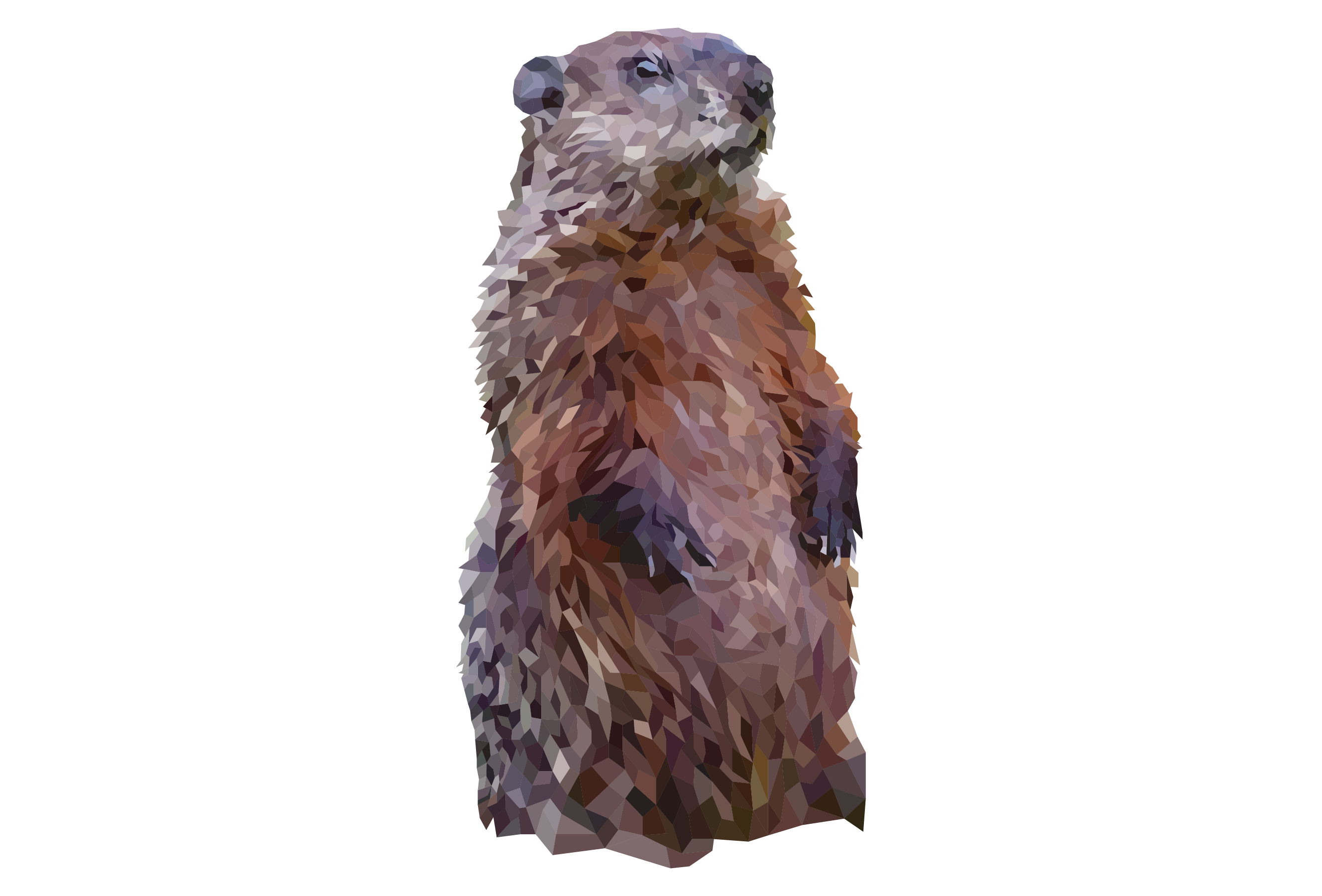
Marmota Monax
The Groundhog, also known as a woodchuck, is a rodent of the family Sciuridae, belonging to the group of large ground squirrels known as marmots. It was first scientifically described by Carl Linnaeus in 1758. The groundhog is also referred to as a chuck, wood-shock, groundpig, whistlepig. Other marmots, such as the yellow-bellied and hoary marmots, live in rocky and mountainous areas, but the groundhog is a lowland creature. It is found through much of the eastern United States across Canada and into Alaska. The groundhog is by far the largest sciurid in its geographical range, excepting British Columbia where its range may abut that of its somewhat larger cousin, the hoary marmot. Groundhogs attain progressively higher weights each year for the first two or three years, after which weight plateaus. Groundhogs have four incisor teeth which grow 1⁄16″ per week. Constant usage wears them down again by about that much each week. Unlike the incisors of many other rodents, the incisors of groundhogs are white to ivory-white. Groundhogs are well-adapted for digging, with short, powerful limbs and curved, thick claws. Unlike other sciurids, the groundhog’s tail is comparably shorter—only about one-fourth of body length.
The groundhog prefers open country and the edges of woodland, and is rarely far from a burrow entrance. They have a wide geographic range. It is typically found in low-elevation forests, small woodlots, fields, pastures and hedgerows. It constructs dens in well-drained soil, and most have summer and winter dens. Human activity has increased food access and abundance allowing them to thrive. Mostly herbivorous, groundhogs eat primarily wild grasses and other vegetation, including berries and agricultural crops, when available. Wild predators of adult groundhogs in most of eastern North America include coyotes, badgers, bobcats and foxes. Many of these predators are successful stealth stalkers so can catch groundhogs by surprise before the large rodents can escape to their burrows.